
The way we manage urban green space is changing, but the way residents perceive it is not changing at the same pace. Bringing both views closer together is the starting point for building a new way of caring for our towns and cities.
«The trees have grown far too big. One day a branch will fall and there’ll be a tragedy.»
«They haven’t mowed the grass in the park for weeks. It’s all neglected.»
«The tree pits are full of weeds. The council no longer cleans them.»
These are common complaints in municipal parks and gardens services. Often, however, they respond to management decisions that are technically justified. A large tree is not necessarily a hazardous tree: keeping healthy specimens with broad crowns is key to providing shade and regulating the temperature of public space. Reducing mowing frequency on meadows benefits biodiversity and allows flowering and fruiting cycles to be completed. And allowing spontaneous vegetation in certain tree pits creates microhabitats for pollinators.
Three everyday situations that point to the same reality: the technical criteria for managing urban green space do not always match residents’ idea of a well-maintained public space. This gap poses a double challenge for local authorities: transforming management to respond to the climate emergency and, at the same time, getting residents to understand and value the decisions being made.
Urban green space as strategic infrastructure
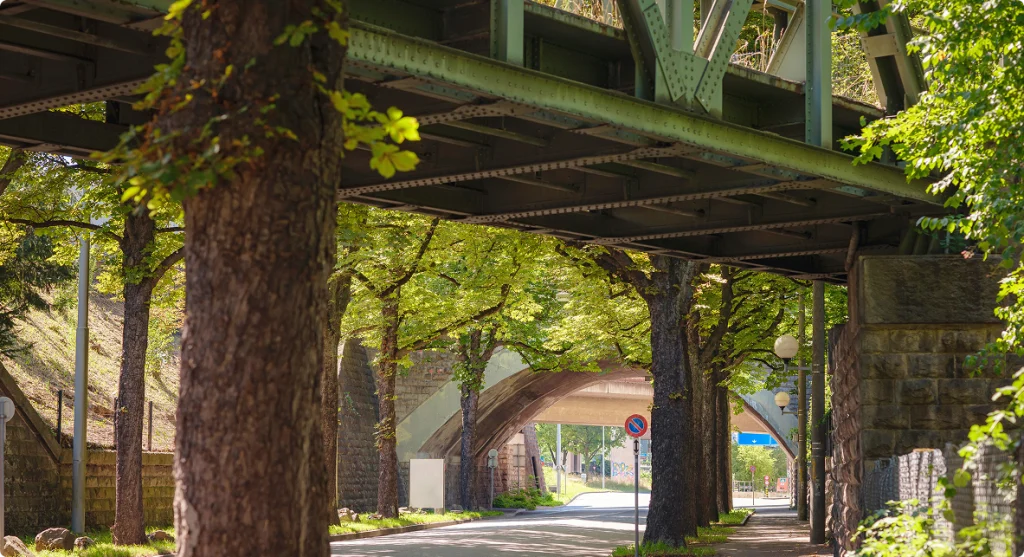
The climate emergency and biodiversity loss force us to rethink our cities. It is not enough to adapt them to higher temperatures, prolonged droughts or episodes of intense rainfall: they must also play an active role in mitigation and in restoring biodiversity. In this context, urban green space ceases to be an ornamental element and becomes green infrastructure. Trees, parks, meadows, naturalised spaces and permeable soils provide concrete ecosystem services: temperature regulation, carbon capture and storage, lower energy demand in buildings, rainwater management, better quality of life and habitat for wildlife.
The European regulatory framework already recognises this. Article 8 of Regulation (EU) 2024/1991 on nature restoration provides that, by 31 December 2030, Member States must prevent a net loss of national urban green space and urban tree canopy cover compared with 2024, subject to the exceptions provided for, and that from 2031 these areas must follow an increasing trend.
Renaturalisation is no longer a voluntary initiative; it is now part of European nature restoration commitments. Meeting them requires more than increasing green surface area: it means reviewing how green space is planned, designed and, above all, managed.
Renaturalising: from aesthetic management to ecological management
Renaturalising means recovering space for nature and enabling urban ecosystems to perform their ecological functions: healthy trees with enough soil volume and space to develop their crowns, living and permeable soils, flowering meadows, species diversification, habitats for pollinators and ecological connectivity between green spaces. It also means reviewing established maintenance practices: reducing mowing frequency in certain areas, avoiding unnecessary pruning, adjusting irrigation to actual water needs, reducing the use of plant protection products and respecting the phenology of species.
This does not mean ceasing to intervene, but intervening with better judgement. Differentiated management requires technical knowledge, planning, monitoring and actions adapted to each space.
The challenge is to reconcile ecological functions with safety, the preservation of infrastructure and people’s needs. We are moving from management centred on order, aesthetics and control of vegetation to management that incorporates biodiversity and the functioning of ecosystems. But public expectations of what a well-kept green space looks like are not evolving at the same pace.
Technical criteria and public expectations: where the mismatch happens
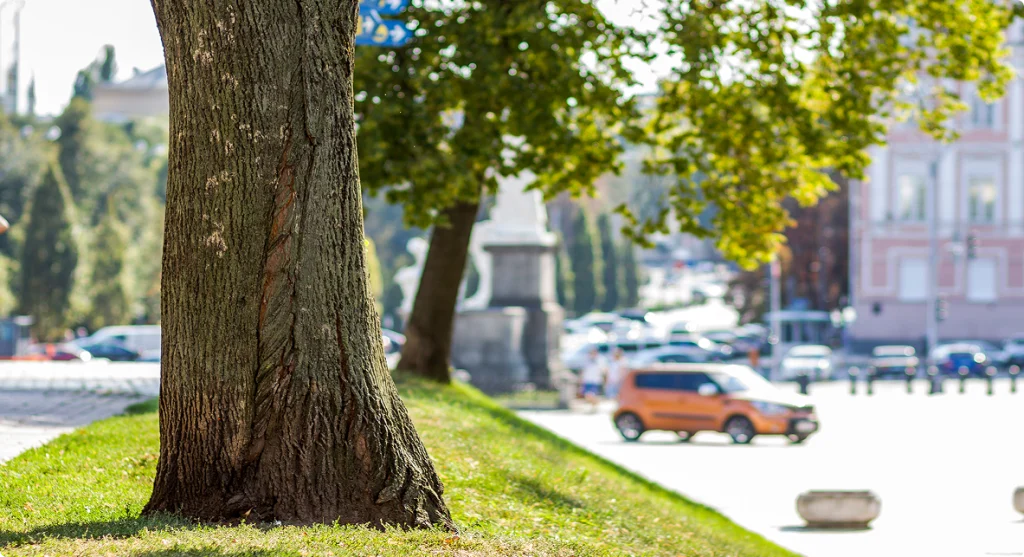
A tree with a well-developed crown is an environmental asset for the city. For the resident who has it outside their window, the same tree may be too big, block their light or make them feel unsafe. Technical teams decide on the basis of plant health, structural stability, biodiversity, the functionality of spaces and their relationship with the immediate surroundings. Residents assess those same decisions from their everyday experience, the nuisances they perceive and their expectations of how public space should be maintained. Often, the technically most appropriate decision is not to intervene, or to do so in a barely visible way. And that is precisely the hardest one to explain.
This does not mean that public concerns are unfounded. Roots that lift paving, branches that interfere with homes or certain pests are real problems that require a technical response. The challenge is to distinguish situations that call for intervention from those in which the conflict stems from a misunderstanding or from unfamiliarity with management criteria.
What the research says: acceptance depends on knowledge
There is a basic contradiction: we want to restore urban biodiversity, yet we still associate a well-kept space with mown lawns, trimmed shrubs and tree pits without a single weed or, in the case of trees, with severe pruning. Scientific research has documented this.
- Support for biodiversity, with an expectation of tidiness. Fischer et al. (2020), in Conservation Letters, analysed the views of 2,027 people in 19 cities across nine European countries on replacing conventional lawns with naturalised meadows. They found broad support for biodiversity-friendly practices, but also a deep-rooted expectation that green spaces keep a tidy, cared-for appearance. Support was higher among people who were more familiar with the concept of biodiversity and felt responsible for conserving it.
- Perceived benefits, the main driver of acceptance. Frank et al. (2024), in Urban Forestry & Urban Greening, surveyed 899 people in Germany, Austria and Switzerland about converting lawns into insect-friendly meadows. Overall acceptance was high, and the factor with the greatest weight was recognition of the meadows’ ecological benefits, ahead of their visual appearance or a general positive attitude towards nature.
- Information changes how management is valued. Unterweger (2017), in Urban Science, asked 424 participants to rate photographs of meadows under different maintenance regimes, before and after receiving information about their environmental benefits. The information improved how naturalised management was rated. Southon et al. (2017) reached a consistent result: tolerance of the appearance of meadows outside the flowering period increased when people were told about their benefits and the savings associated with fewer cuts.
- Tree management and public perception are interrelated. Jeong, Han and Ko (2023), in Forests, surveyed 884 residents of the Seoul metropolitan area to find out how satisfied they were with tree management criteria. The most relevant conclusion is that technical management and public perception should not be treated as two separate issues: knowing what residents value can help explain better why certain actions are taken.
How we perceive a green space depends not only on what we see, but on what we know about its function. A meadow with tall vegetation stops looking like a lack of maintenance once its role in conserving biodiversity is understood.
Information does not resolve every conflict: perceptions also depend on personal experience, usage needs, nuisances and trust in municipal management. But the evidence points in a clear direction: perceptions are not fixed, and knowledge helps to change them.
Public perception not only influences how green spaces are valued; it can also condition the adoption of new maintenance practices. A qualitative study by Hoyle et al. (2017), based on interviews with eight municipal managers in Luton and Bedford (UK), identified aesthetics and public reaction, the characteristics of each site, and the availability of human and financial resources as the determining factors in implementing perennial meadows. The results suggest that the transition to more sustainable management is not purely a technical challenge: it also depends on organisational conditions and on the social and political context.
In the case of urban trees, how people value them depends not only on the benefits or nuisances they bring, but also on what they know about how trees are managed and on the trust they place in municipal managers. This poses a risk that local authorities cannot ignore: if renaturalisation actions are perceived as a lack of maintenance, they can generate pressure to return to conventional practices and jeopardise the continuity of the changes. That is why communication cannot be a complementary activity or be limited to responding to complaints: it must be part of the management strategy itself.
Communicating management: six lines of work
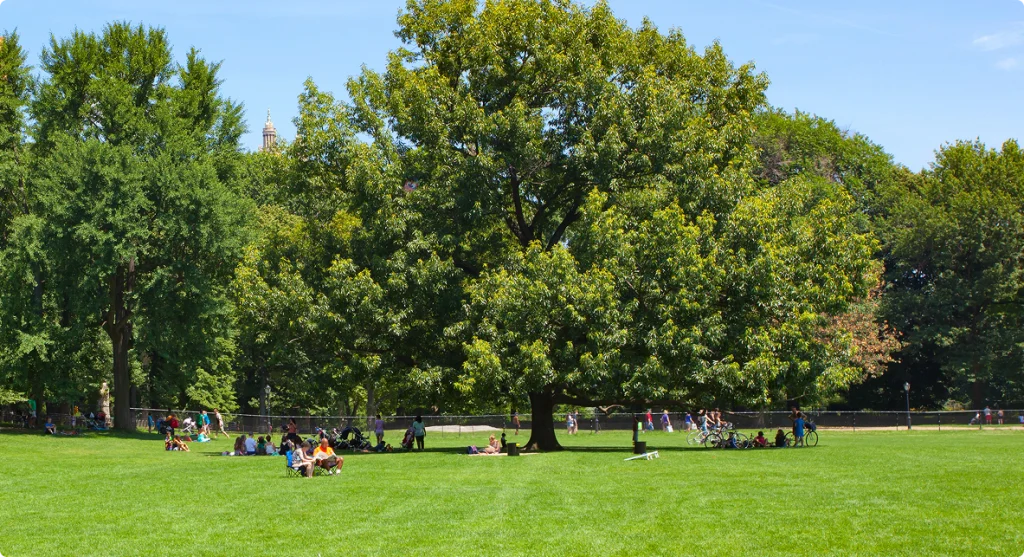
It is not about communicating more, but about communicating better. This means building communication into the management strategy from the outset, as a tool that accompanies technical decisions rather than a one-off action once the conflict has already arisen. It also means understanding how residents perceive urban green space, what shapes that perception, and building messages that connect environmental objectives with everyday concerns.
1. Diagnose before explaining
Complaints, public consultations and the experience of maintenance teams are a first-rate source of information. Which actions generate the most controversy? Which concerns come up repeatedly? Are there differences between neighbourhoods? Which criteria are hardest to understand? This analysis makes it possible to identify conflicts, understand their causes and define which perceptions need work: responding to a concern about tree safety is not the same as justifying a reduced mowing frequency on a meadow.
2. Explain decisions, not just actions, and do it in advance
Residents need to understand what will be done, why, using what criteria and with what expected results. If a park is going to include naturalised meadow areas, it is necessary to explain in advance how the space will change, why maintenance is being modified and which areas will keep their usual uses. When the changes become visible, residents will have the elements to interpret them.
3. Translate technical criteria into tangible benefits
Concepts such as ecosystem services, ecological connectivity or differentiated management are hard to grasp outside the technical sphere. Explaining how a tree crown lowers the temperature of a street, how a flowering meadow sustains pollinator populations or how a permeable soil lets rainwater infiltrate connects the decision to everyday life.
4. Make management visible
Management that intervenes less risks looking like an absence of maintenance. Management calendars, explicit intervention criteria and what the literature calls cues to care (mown edges that frame the meadow, on-site signage) make it clear that behind every decision there is planning, technical knowledge and monitoring.
5. Ensure internal consistency
Technical services, elected officials, maintenance contractors and public enquiry channels must know and share the management criteria. Contradictory messages erode trust more than any single action.
6. Listen and evaluate continuously
It is essential to know whether perception is changing, not just to count signs, posts or activities. The trend in complaints, perception surveys and feedback from municipal teams are useful indicators. And the information gathered should be used to adjust both the communication and, where appropriate, the technical decisions, without giving up the environmental objectives.
Management that is understood and shared
Communicating sustainable urban green space management is a way of bringing residents’ knowledge, perceptions and expectations into municipal management, of anticipating conflicts and of building trust around decisions that transform the city. Renaturalising requires technical judgement, planning and decisions that will not always be easy to understand. It also requires that residents know what it is for, understand its benefits and can take part in building a public space that responds both to environmental challenges and to people’s needs.
Municipalities that take on the responsibility of renaturalising should be perceived as municipalities driving a new way of caring for the territory, not as municipalities that have stopped caring for it. Achieving this is also part of managing urban green space.
FROM CRITERIA TO THE STREET: TWO RESOURCES FOR LOCAL COUNCILS
Some of these lines of work can be applied right now. That is why we have created two resources that adapt to each municipality’s reality. One brings technical criteria into the park and turns each tree into concrete benefits. The other brings it to the municipal website and answers questions before they become complaints.
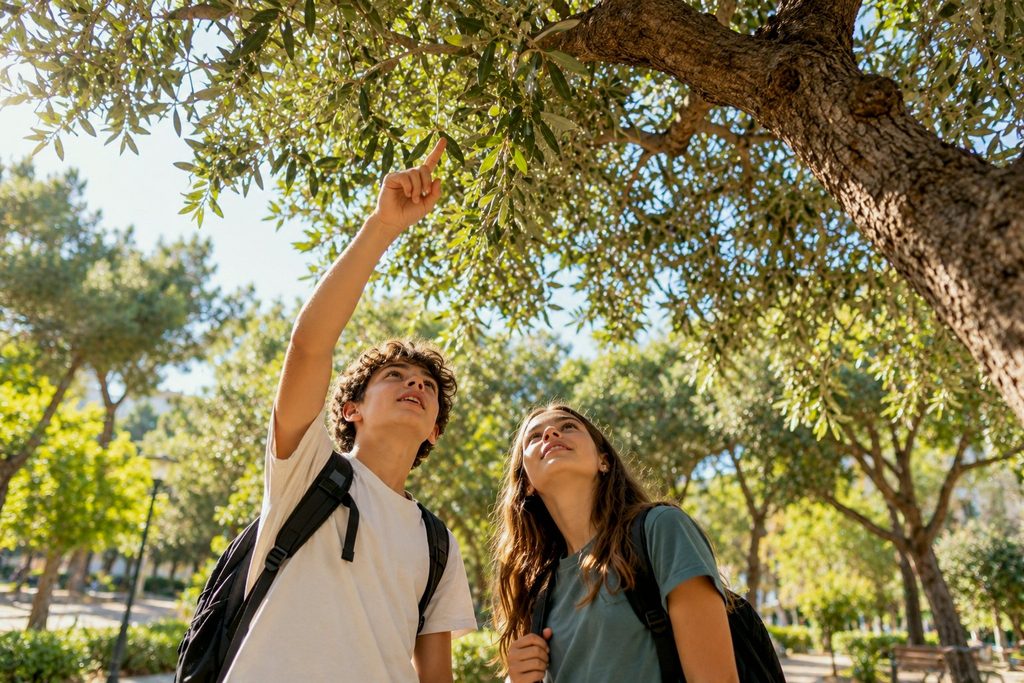
The green we don’t see
A family activity that turns a park in the municipality into a route of 15 to 20 stops. First you observe the tree; then you discover what it contributes.
Take the activity to your municipality
70 questions about urban green space
A collection of frequently asked questions about green space management, adapted to your municipality and ready to publish on the website.
Adapt them to your municipalityAre you implementing differentiated management criteria in your municipality?