
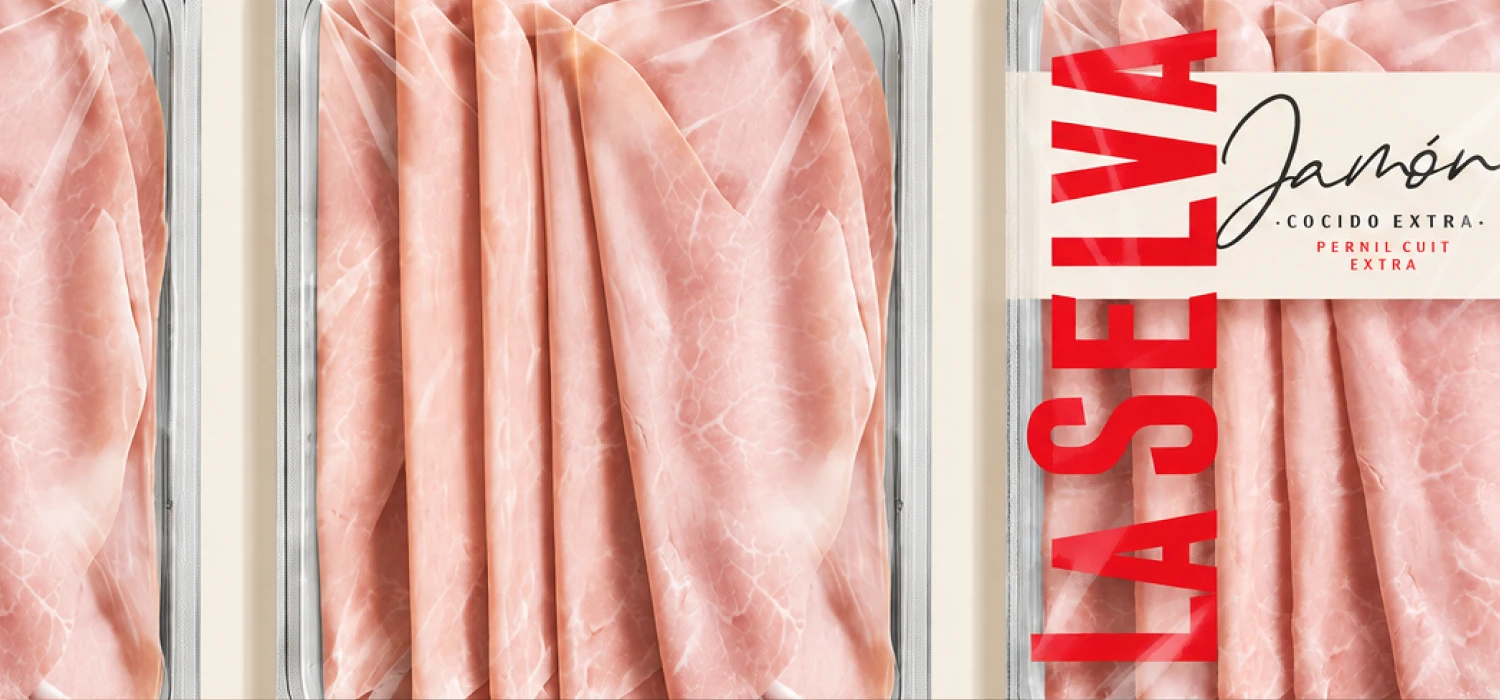
The declaration became a tool for spotting costs, penalties and redesign opportunities.
Where this project comes from
This project stems from Royal Decree 1055/2022 coming into force, which extends Extended Producer Responsibility (EPR) to commercial and industrial packaging and requires companies to declare, every year, all the packaging they place on the market. For LA SELVA, with thousands of active references and a large supplier network, the challenge was considerable.
The difficulty wasn’t just complying with the law, but doing so with judgement. The still-immature digital systems run by the EPR schemes, combined with the lack of a consistent internal structure, made it unworkable to treat the declaration as a simple administrative formality. What was needed was to rethink how packaging information was collected, how it connected to suppliers, and how the cost tied to each pack was built into invoicing. With thousands of references in play, meeting EPR requirements means organising the data before filing the declaration.
What it changes, and why it matters
This project turns a legal obligation into an opportunity for order. The packaging declaration stops being an annual burden and becomes an ongoing system of knowledge about the packaging in use — its composition, its economic impact, and the bonuses or penalties it attracts under eco-modulation criteria.
The key is that the regulation doesn’t just require declaring — it also requires prevention, prioritising recyclability, and reflecting the real cost of packaging. Without a clear system, these requirements create friction. With a methodology, they become strategic information for making better decisions: which packs carry the highest penalties, which are worth redesigning, and where to focus improvement efforts.
How we do it
At Spora, we designed an internal system for collecting and processing packaging information, aligned at once with the law, with the EPR schemes, and with LA SELVA’s real-world operations. The tool characterises each pack by type (household, commercial or industrial), material composition, and its individual components.
On that basis, the system calculates the cost tied to each pack under the eco-modulation criteria, then ranks and prioritises them by different factors: economic impact, material complexity, regulatory penalties, or volume placed on the market. The result is a single, easy-to-use internal tool that automates much of the work behind the annual declaration and makes it easier to fold into invoicing. A single system connects type, composition, eco-modulation, prioritisation and invoicing for every pack.
Limits, lessons, and the future it sets in motion
This project shows that the real challenge of EPR isn’t the declaration itself, but data quality. Without a robust internal system, compliance stays fragile and reactive.
The key lesson is that getting ahead of regulation buys real decision-making room. This tool isn’t built for LA SELVA alone: its modular design makes it adaptable to any company that needs to handle industrial and commercial packaging declarations.
The future it sets in motion is clear: packaging management aligned with the circular economy, where regulatory compliance, cost control and ecodesign stop being separate areas and become part of a single business strategy. Regulatory compliance, cost control and ecodesign can all be part of the same business strategy.