

Environmental measurement feeds product decisions and a credible communication able to strengthen customer trust.
Where this project comes from
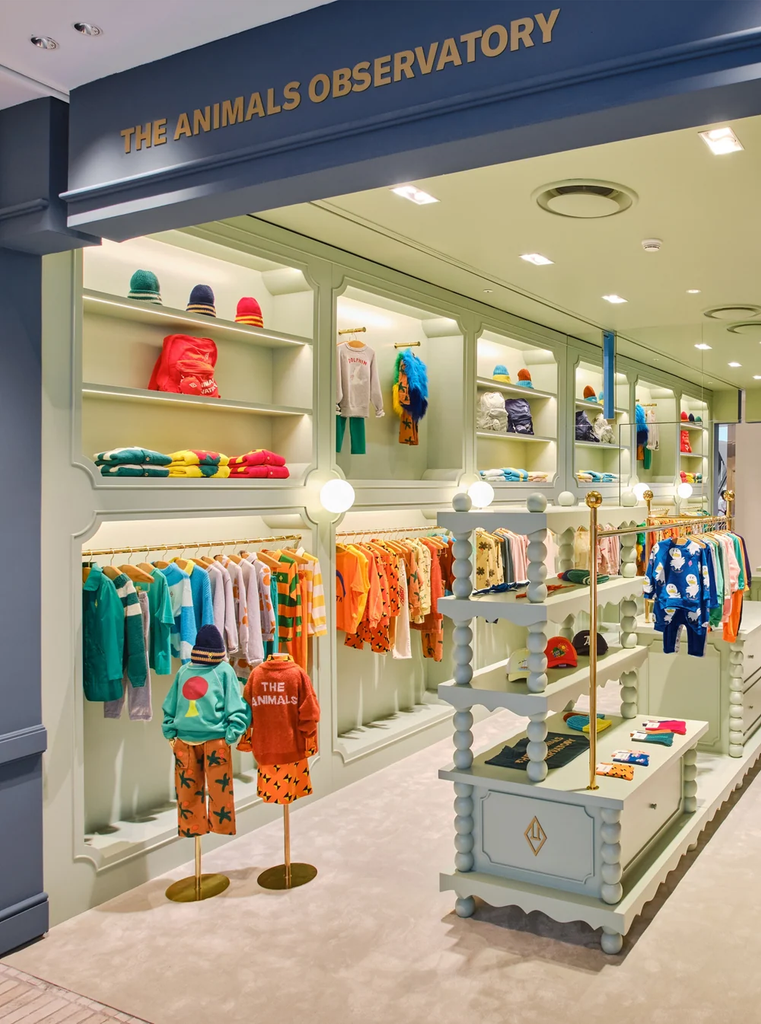
The Animals Observatory is a premium kids’ fashion brand with a recognisable artistic identity and an international presence. Its track record on responsible materials and supplier management provided a solid base to build on.
The challenge was to organise that knowledge and connect it to decisions on product, circularity, positioning and growth. Spora puts together a program of support that brings together ESG diagnosis, value chain, carbon footprint and a sustainability strategy linked to communication and sales.
The project turns scattered initiatives into a shared roadmap that guides management and reinforces a value proposition consistent with the brand’s creative personality.
What it transforms and why it matters
The carbon footprint provides a base for understanding emissions and prioritising improvements using comparable criteria. This reading is integrated into the ESG system alongside indicators on materials, suppliers, operations and product.
Circularity is worked on from the reality of the fashion model. We analyse purchasing, traceability, stock, durability and second life, assessing each option for its impact, feasibility and value to the customer.
The strategy connects this evidence to communication and sales. It builds clear arguments about product, purpose and impact, and places sustainability within the brand’s core narrative and commercial positioning.
How we do it
The work combines workshops, value chain diagnosis, B Corp and VSME analysis, footprint calculation using recognised frameworks, and a review of circular opportunities. It also tests the brand’s creative DNA against its value proposition and market-facing messages.
With this view, we define priorities around governance, ESG data, climate action, procurement, traceability, circular product, culture, communication and market. Not everything needs to be activated at once: we sequence actions according to the company’s stage, its resources and its contribution to the business.
Teams thus work in the same direction. Data underpins decisions, and communication translates technical progress into understandable benefits without promising more than can be substantiated.
Learnings and continuity
This program of support starts from a reality: sustainability can’t always be the company’s top priority. That’s why we build it into decisions that also respond to needs around product, suppliers, communication and market.
Working from footprint, circularity, business model and brand makes it possible to identify what adds the most value at each moment. The company can move forward in stages without losing coherence or technical depth.
The trust built with the team makes it possible to review priorities and adapt the roadmap without imposing closed-off solutions. Spora maintains the overall vision and turns technical knowledge into manageable projects, applicable decisions and brand value.
Trust lets us support every stage without losing sight of what the business needs at each moment.