
Analysing 13 environmental categories turned the LCA into concrete decisions about materials, energy and finishes.
Where this project is born
This project starts from a prior conviction: not all “recycled” solutions are equal, and not all design decisions carry the same impact, even when they look like they should. Mister Karton wanted to test a clear hunch against real data: that producing a single-material acoustic panel from recycled cardboard, reusing internal waste, would have a lower environmental impact than a more complex alternative built from mixed materials, decorative layers and external components.
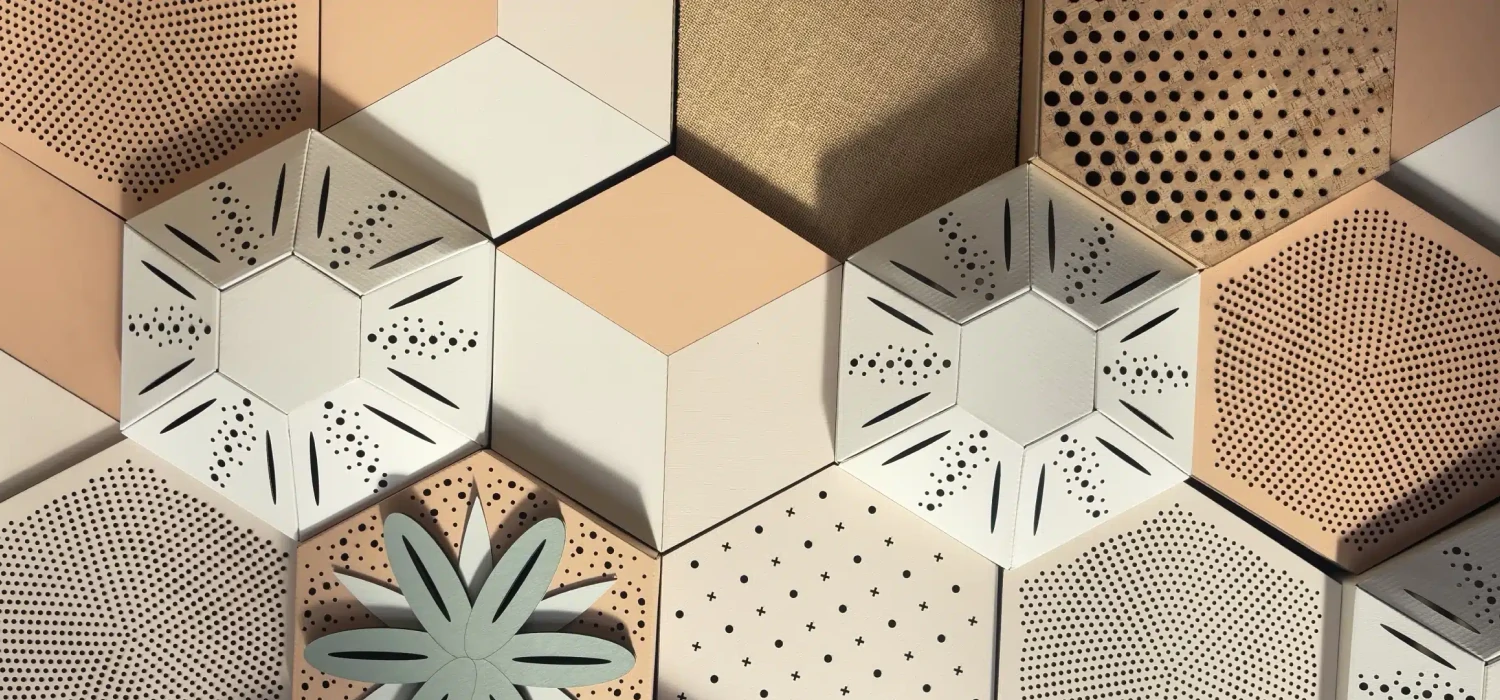
To find out, we analysed the real impact of two different ways of manufacturing the same product: a hexagonal acoustic panel for sound diffusion and absorption, designed to cover vertical surfaces, with both aesthetic and functional value. Both alternatives shared the same structure and function; the difference lay in the infill and the material complexity of the product. Comparing before manufacturing turned an ecodesign hunch into a data-backed decision.
What it changes, and why it matters
The Life Cycle Assessment confirmed the initial hypothesis: the alternative built entirely from recycled and reused cardboard has a lower overall environmental impact across practically every category analysed, including climate change. The difference isn’t marginal: using single-material components and recirculating internal waste clearly cuts the product’s upstream impact.
The single-material recycled-cardboard solution had a lower impact in practically every category analysed.
But the value of the exercise wasn’t just in confirming what was expected. The LCA also revealed less obvious impacts — such as the significant weight of diesel consumption at the facilities, or the environmental impact linked to paint and aesthetic finishes. Elements that, from a design standpoint, aren’t always seen as critical, but that meaningfully shape the product’s final environmental profile.
How we do it
At Spora, the project was approached as a rigorous comparative LCA, following ISO 14040 and 14044, with a cradle-to-gate scope. We analysed 13 environmental impact categories and broke the results down by stage — upstream and core — and by product component: front panel, backing, infill and packaging.
This level of detail made it possible not just to compare alternatives, but to identify specific points for improvement in the production process and product design. The study became a direct ecodesign tool — replicable for future developments and able to accompany each product with its own LCA or EPD.
Limits, lessons, and the future it sets in motion
This exercise makes it clear that environmental impact isn’t corrected at the end — it’s decided at the start. An LCA doesn’t eliminate impact on its own, but it prevents structural mistakes that are hard to reverse later on.
The future this project sets in motion is strategic: designing recycled, recyclable, single-material products from the outset, with clear traceability and environmental data tied to every reference. And, from there, supporting the company in communicating these results honestly — treating environmental impact as a roadmap for continuous improvement, not as a closed snapshot or a standalone sales pitch. Measuring impact from the design stage makes it possible to avoid mistakes, prioritise improvements, and communicate results with rigour.